Posts

ResNetSLT presentations at 10th European Congress of Speech and Language Therapy

Image
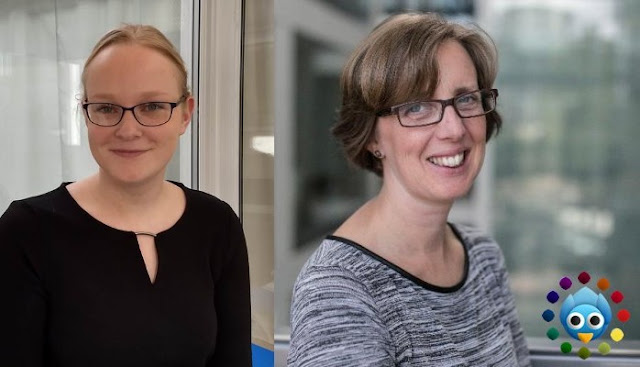
Our #ResNetSLT workshop on 12th May attracted a packed room of approximately 60 delegates from many different countries. The show of hands indicated a high number of student SLTs ( #SLT2B ) in the audience, together with educators, clinical practitioners and researchers. Please click here to access a copy of the presentation slides that include links for other relevant resources and recommendations for many names to follow on Twitter. We briefly explained how the #ResNetSLT Twitter journal club runs, and that a German version has been launched. We heard about plans for a new journal club on Twitter between Netherlands and Sweden, and #ResNetSLT offered some advice and assistance based on our experience over the past two years. It was great to hear that SLT students and practitioners are increasingly using Twitter in many languages to share research and professional discussions – as well as other social media platforms. For anyone interested in getting started on Twitter for the first...

Why get involved in research whilst studying?

Image
Thank you to Chiara Vivaldi ( @VivaldiC ) for producing the latest ResNetSLT blog post. As a full-time speech and language therapy student I know there are a million and one things to stay on top of (and I'm doing the undergraduate course, I can't imagine what it's like for Masters students!) So why would you want to add getting involved in research to the list? In my case, one reason I have chosen speech and language therapy as a career is the possibility of combining clinical and academic practice, of placing yourself at the exciting and complicated juncture where academic research meets clinical practice. I've been involved in two research projects so far, which have each required only a relatively little of my time. On the practical side, being involved has honed my assessment scoring skills (never a bad skill to practice), and given me a sense of the logistics of running a research project. The research academics have always been more than willing to answer any que...

Tweetchat: An introduction to implementation science for the non-specialist

Image
The fourth #ResNetSLT Tweetchat of 2018 took place on Wednesday, 25th April. The chat was hosted by Amy Hilton ( @AmySlt ) and Sally Morgan ( @sallymorganslt ) and was based around this paper: ' An introduction to implementation science for the non-specialist '. The pre-chat overview and questions can be viewed here . The Tweetchat was very fast-paced, with many threads of conversations occurring simultaneously with representation from SLT students, SLTs at different careers stages, as well as those working in research, and participants from other countries. The average number of tweets was the highest number so far this year, potentially indicating the level of interest and engagement in the topic. Our Twitter 'impressions' were again over 300,000, with continued reach evident across the world, including an Australian contingent the following day. It seemed those with a research background were familiar with the term 'implementation science' as a minimum. Howe...

Tweetchat: Using Twitter to access the human right to communication for people who use Alternative and Augmentative Communication (AAC)

Image
The third #ResNetSLT Tweetchat of 2018 took place on Wednesday 28th March. The chat was based around the paper: ' Using Twitter to access the human right to communication for people who use Alternative and Augmentative Communication (AAC) '. It was hosted by Katherine Broomfield ( @kathbroomfield ) and Elicia Jones ( @EllieJSLT ). The pre-chat overview and questions can be viewed here . It was great to see so many people engaged in the conversation, with over 30 actively tweeting and using our hashtag #ReSNetSLT from various places around the world! Our Twitter 'impressions' went up by almost 100,000 which was amazing too, as this indicates the potential reach of our online conversations and exchange of ideas. There is still some evident uncertainty over whether we should be using social media which was interesting, but probably unsurprising as this is still such new territory. Thanks to everyone who shared their own experiences of using Twitter including with people w...

Wilkommen! Va bene?

Image
Thank you to Hazel Roddam ( @HazelRoddam1 ) for producing the latest ResNetSLT blog post. Have you seen all our new international friends who've started joining us on #ReSNetSLT? It's been exciting to 'tweetmeet' with a growing number of new connections from across mainland Europe. A special warm welcome to Germany and Italy, who have been very active in joining our recent monthly Twitter journal club discussions. This is such a great opportunity for immediate real-time contact with colleagues with no barriers of geography, or professional discipline. I've just heard a new phrase today - 'connectography, not geography'. That seems so appropriate for us! Do you like it? Here's some news about a unique conference in September - watch the video clip to hear more. We're bringing together practitioners and academics in nursing, midwifery and health sciences from all around Europe to share inspiring examples of applied research to change practice. Please ...

Tweetchat: Allied health research positions: a qualitative evaluation of their impact

Image
The second ResNetSLT Tweetchat of 2018 took place on Wednesday, 28th February. The chat was hosted by Amy Hilton and Hazel Roddam and was based on this paper: ' Allied health research positions: a qualitative evaluation of their impact '. The findings in this research highlight the value of allied health profession (AHP) clinical research positions. Please click here to view to pre-chat overview and questions. We had 21 people actively tweeting and using our hashtag #ResNetSLT, with many others also watching and retweeting the conversations. There were 238 tweets in total during the hour, with a 'reach' to over 213,000 linked Twitter accounts. Thanks so much to Caroline Bowen  in Australia for saying 'hello' at the start of our chat. It was really exciting to hear comments from Germany and Italy, sharing their experiences from differing work settings. It seems that there are still only a small number of allied health research positions established in UK prac...

My experience (so far) of a clinical-academic research role

Image
Thank you to Millie Heelan ( @heelan_phd ) for producing the latest ResNetSLT blog post. In October 2016 I took up an opportunity of a clinical doctoral research fellowship. This involves four years of funding to work two days a week as part of an adult acute SLT team and three days a week conducting a PhD study. Further information on conducting a clinical doctoral research fellowship can be found here . This opportunity has been a great learning curve to date, embracing the academic world, research methods and meeting an inspiring range of people interested in changing future practice for our patients. One thing that is very important when conducting a PhD, as well as in clinical practice, is keeping up to date and knowledgeable about research happening in your area. Here are a few ideas to remain current within your field: Get in touch with your trust library service. They are experts in creating the right search terms. They will help to successfully find publications to help answe...